A clearer customer journey
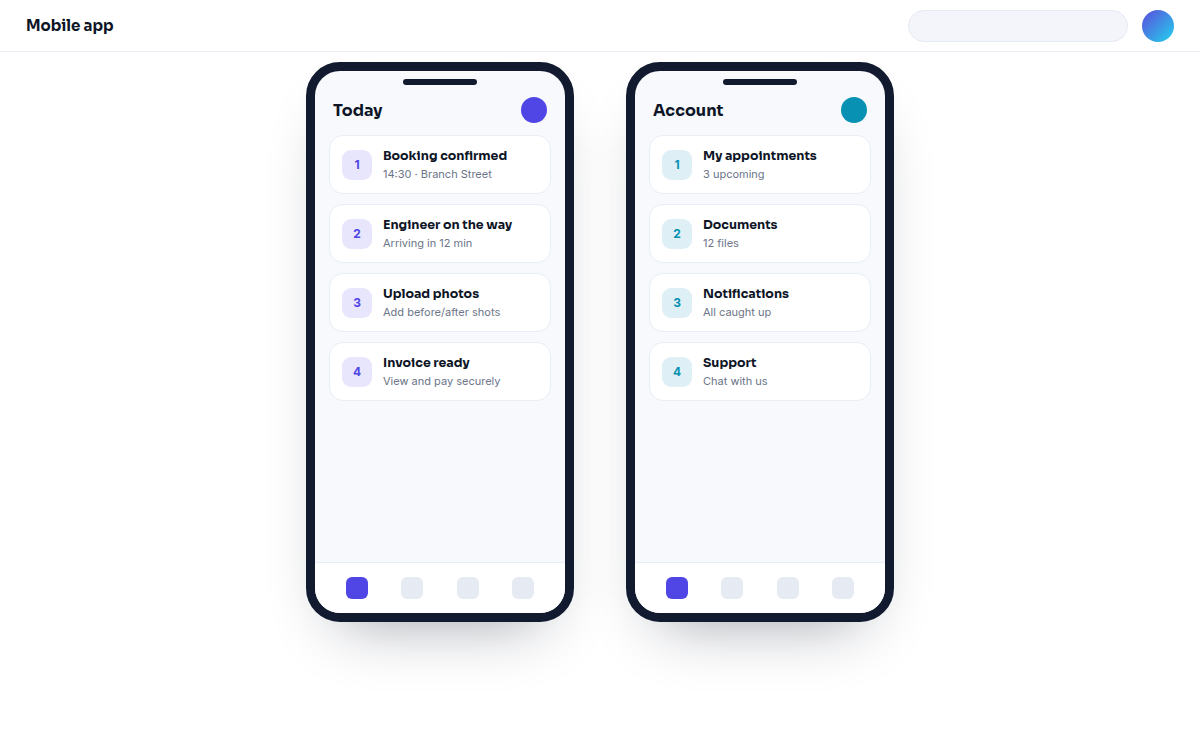
Customers can complete the important task without searching through a desktop-shaped interface or repeating information.
Mobile app development
We design and develop iOS, Android and cross-platform applications around a clear job to be done. That may be a customer app, an internal business tool or a connected service that turns your existing systems into a better mobile experience. We will also tell you when a mobile-optimised website or progressive web app is the more sensible answer.
Before we build
Mobile projects go wrong when the technology is chosen before the user problem is understood. We start by testing the need for an app against the simpler options, then scope the experience, integrations and ongoing responsibility honestly.
A list of features is not a product brief. We need to know what a person should be able to do faster, better or more reliably.
If people only need occasional information, a fast mobile website may be easier to find, share and maintain than an installed app.
Customers and staff lose time when the mobile journey depends on disconnected forms, inboxes and spreadsheets.
An attractive front end cannot compensate for missing APIs, unclear data ownership or unreliable third-party services.
Apps need decisions about feedback, updates, store submissions, access and support after the first release.
Accounts, payments, location, personal information and internal records need sensible permissions and secure handling.
A first release should solve a defined problem; adding every possible feature delays learning and increases maintenance.
If there is no repeat behaviour, useful notification or meaningful mobile advantage, an app may add friction rather than value.
What we deliver
We turn the agreed user journey into a maintainable application, with the technical groundwork to connect it to the systems you already rely on. Every feature is considered against usefulness, accessibility, security and the cost of keeping it working.
Clarify the audience, core use case and success criteria, then compare a native app, cross-platform app, mobile web experience and progressive web app.
Map journeys, states, permissions and empty screens before creating a clear interface that works with touch, small screens and real-world attention.
Build platform-specific experiences where device capabilities, performance or store expectations make native development worthwhile.
Use a shared codebase where it gives you a practical route to both platforms without compromising the experience users need.
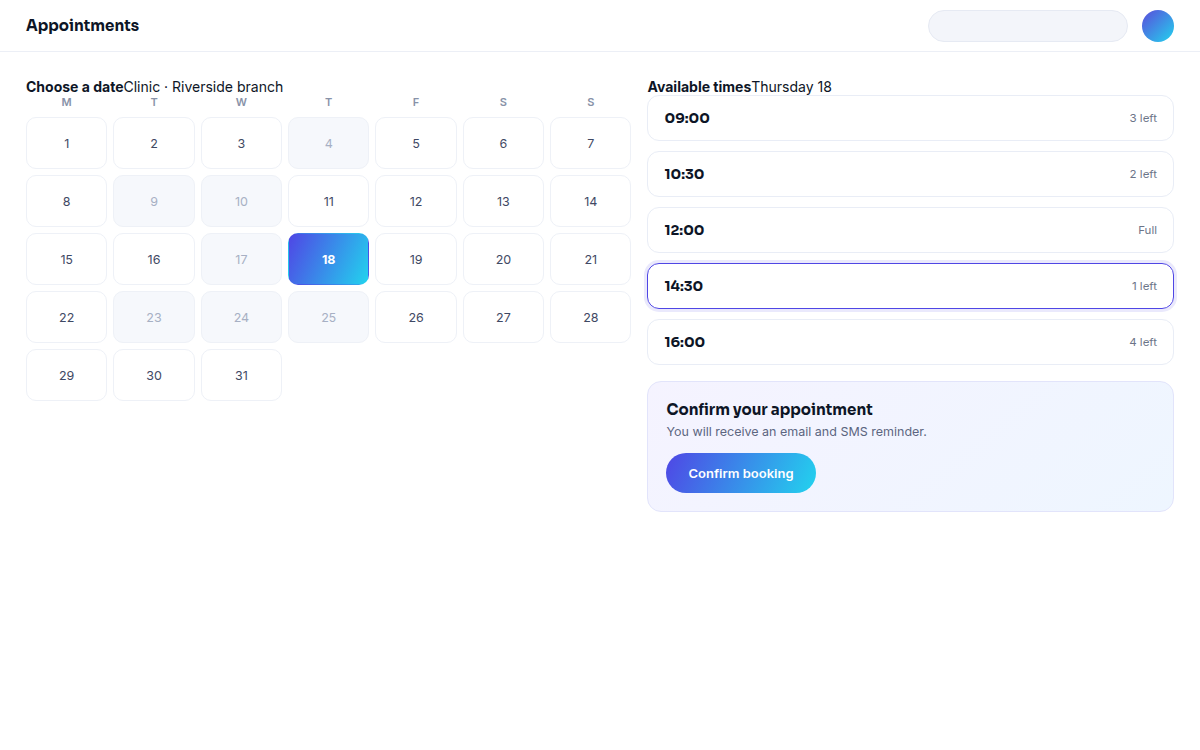
Connect the app to your website, CRM, booking system, payments, accounts or internal data through documented and testable integrations.
Plan sign-in, roles, permissions, session behaviour, offline states and the safe handling of information the app can access.
Prepare app metadata, testing builds, review requirements and release steps for the Apple App Store and Google Play.
Keep dependencies, operating-system compatibility, integrations and store versions under review, while using feedback to prioritise the next improvement.
Mobile experience
Mobile product decisions become clearer when the core task, its states and the supporting workflow are visible before features multiply.
What the work is designed to achieve
We do not promise downloads or invented adoption figures. We build towards a useful, understandable experience that earns repeat use and gives your business a sound platform to improve.
Customers can complete the important task without searching through a desktop-shaped interface or repeating information.
Field, sales and operations teams get a focused mobile workflow instead of adapting general office software to a phone.
The app is designed around the systems that hold the truth, reducing duplicate entry and disconnected customer records.
Documented decisions, reusable components and a sensible release plan make future changes less risky.
You get the app where it creates a real advantage, or a simpler mobile experience when that serves the audience better.
How the project runs
We keep the first release purposeful and make the important technical decisions visible. You know what is being tested, what is ready to review and what is deliberately being left for later.
We start with your business, not your pixels. What the website is supposed to do, who it serves and where it currently loses people.
A structured review of design, UX, performance, technical SEO, content and conversion paths — with findings ranked by business impact.
A clear roadmap for the upgraded website: structure, priorities, technology, content plan and what happens in which order.
The new visual experience — page by page, device by device, built as a reusable design system rather than one-off screens.
Clean, standards-based build with the integrations, CMS and automation your team needs to run the site confidently.
Speed, Core Web Vitals, technical SEO, accessibility, mobile experience and conversion paths — measured and refined.
A controlled deployment, tracking in place, and a growth plan for what comes after go-live.
Mobile app questions
The best app projects make the difficult choices early. If you are still deciding whether an app is needed, that is a useful place to start.
We look at how often people return, whether they need notifications or device features, whether offline use matters and how much friction installation would create. A mobile website or progressive web app is often the better choice for occasional, public or link-led journeys; an installed app earns its place when repeat use and device access justify it.
Not always. A cross-platform build can be the practical route when the journeys and capabilities are shared, while native development may be sensible for demanding device features or platform-specific behaviour. We recommend based on the product, not on a fashionable technology choice.
Usually, if the existing system exposes a reliable API or can be extended safely. We review authentication, data ownership, error handling and rate limits before promising an integration, and we will flag where a connector or backend change is needed.
We prepare release builds, store content and the technical information needed for submission, and can guide the release process. Store review decisions remain with Apple and Google, so we do not promise approval on a particular date.
Launch is the beginning of the feedback loop. We can support operating-system updates, dependency changes, integration monitoring, fixes and a prioritised backlog so improvements follow evidence rather than becoming an uncontrolled list of features.
Yes. Staff tools can use controlled access and an appropriate distribution route, depending on your devices, policies and security requirements. We will consider whether a secure mobile web tool is simpler for your team before choosing private app distribution.
Pairs well with
Tell us what your customers or team need to do on mobile. We will help you compare the right delivery route, define a useful first release and identify the integrations it will depend on.